BEHIND THE BOOK
The real Mermaid’s Pool
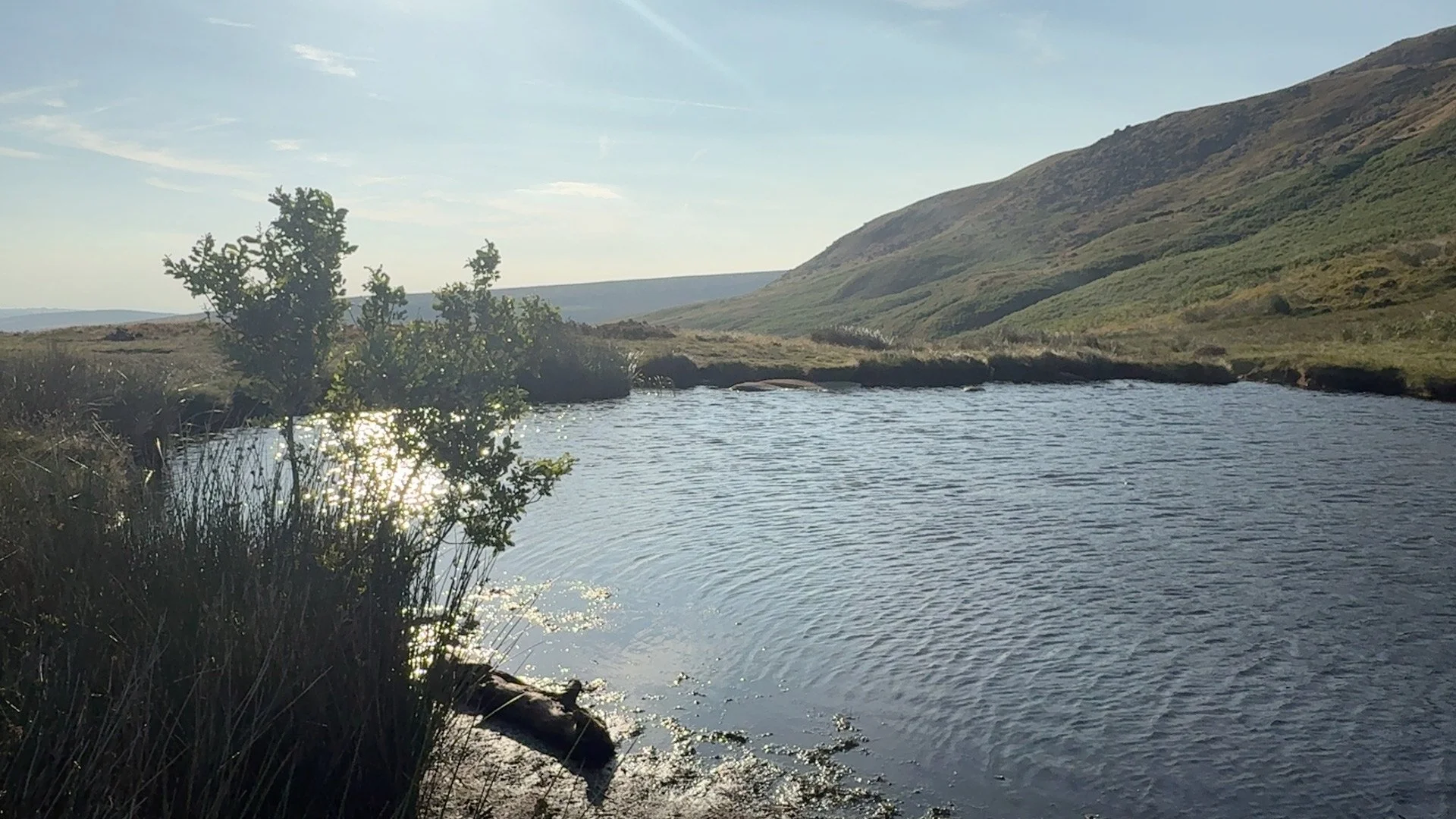
The Mermaid’s Pool is an eerie, magical place. It sits high on the moors of the Peak District, beneath the rim of Kinder Scout, the region’s highest plateau. It is remote and windswept. No paths lead there. To reach it, you must cut through expanses of heather and bracken. The pool hides in a flattened dip in the slope, invisible from below and on the approach. Only when you are a few metres away does it come into view, and once you stand at its edge, the rest of the moor falls away beneath you.
THE LEGEND
A mermaid on the moors
Local tradition tells of a mermaid who rises from the pool’s dark water. The story is said to have been passed down by word of mouth for generations before Victorian folklorists first recorded it in writing. Their collections, together with a poem by Henry Kirke published in 1869, popularised the pool and its legend. As usual, folklore tellings vary. In some, the mermaid appears on Midsummer’s Eve and lures young men to their deaths with her song. Later accounts move her to Easter, and promise an extraordinary reward to anyone lucky enough to glimpse her. The gift and the drowning have run through the tale ever since.
A maiden, strangely fair, but strangely formed,
Rises from out the pool, and by her songs
And heavenly beauty lures to shameful death
The luckless wight who hears her melodies.
— HENRY KIRKE, THE MERMAID’S POOL, 1869
HOW THE NOVEL BEGAN
A name on a map
The Mermaid’s Pool became the title and setting of my novel almost by chance. I was poring over maps of the Peak District, looking for inspiration, when a name leapt out at me: Mermaid’s Pool. It jogged a memory of a story I had heard as a child, and from that moment there was no looking back.
I chose to set the novel in 1813, a moment poised between old beliefs and new. Many people still believed mermaids were real: in 1809, The Times printed a letter from a Scottish schoolmaster describing a mermaid he had seen on the Caithness coast. Yet plenty of others dismissed such tales as superstition. My novel plays with that ambiguity. Some villagers are certain the mermaid exists; others are sure she is nothing more than a story.